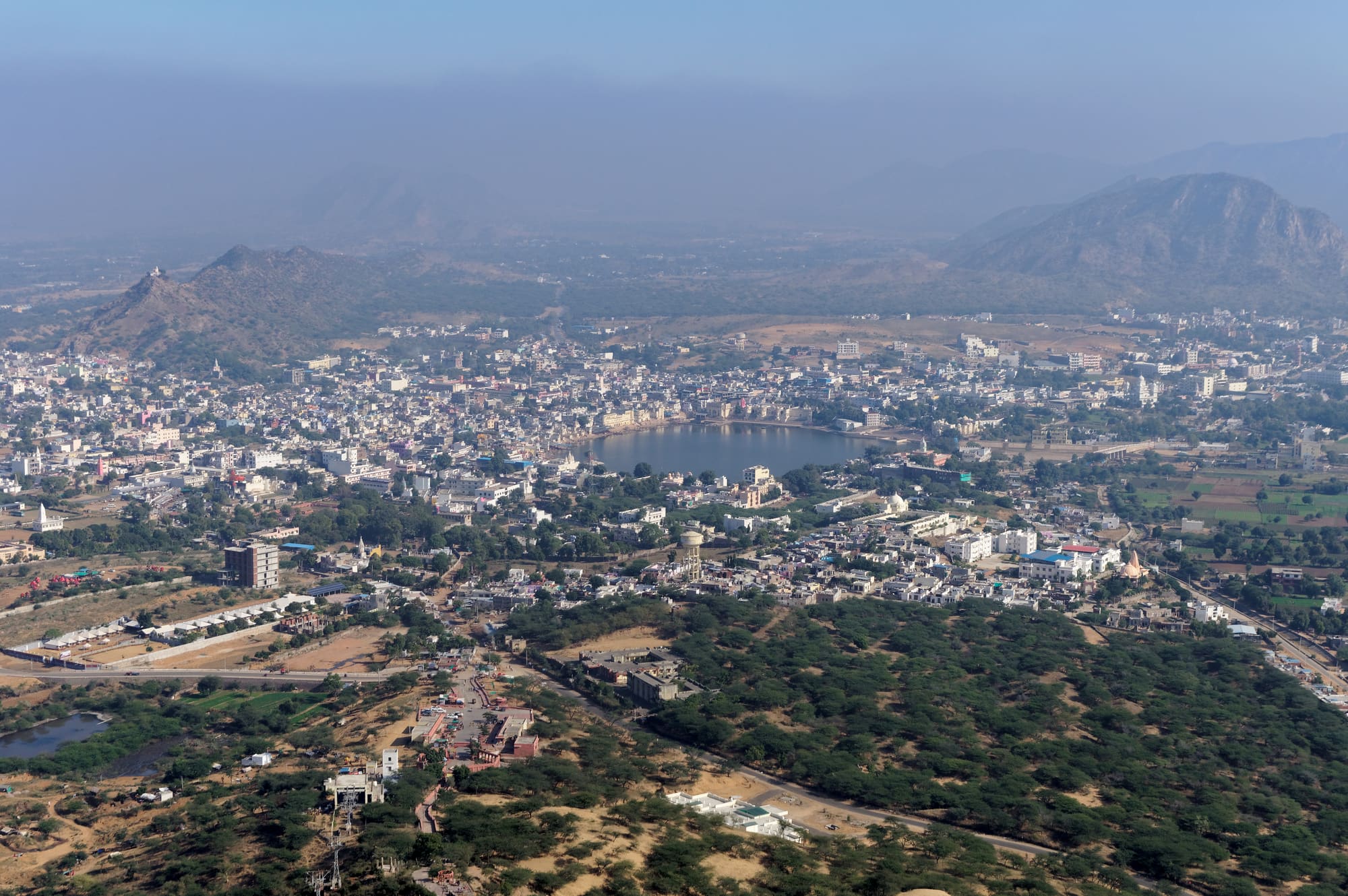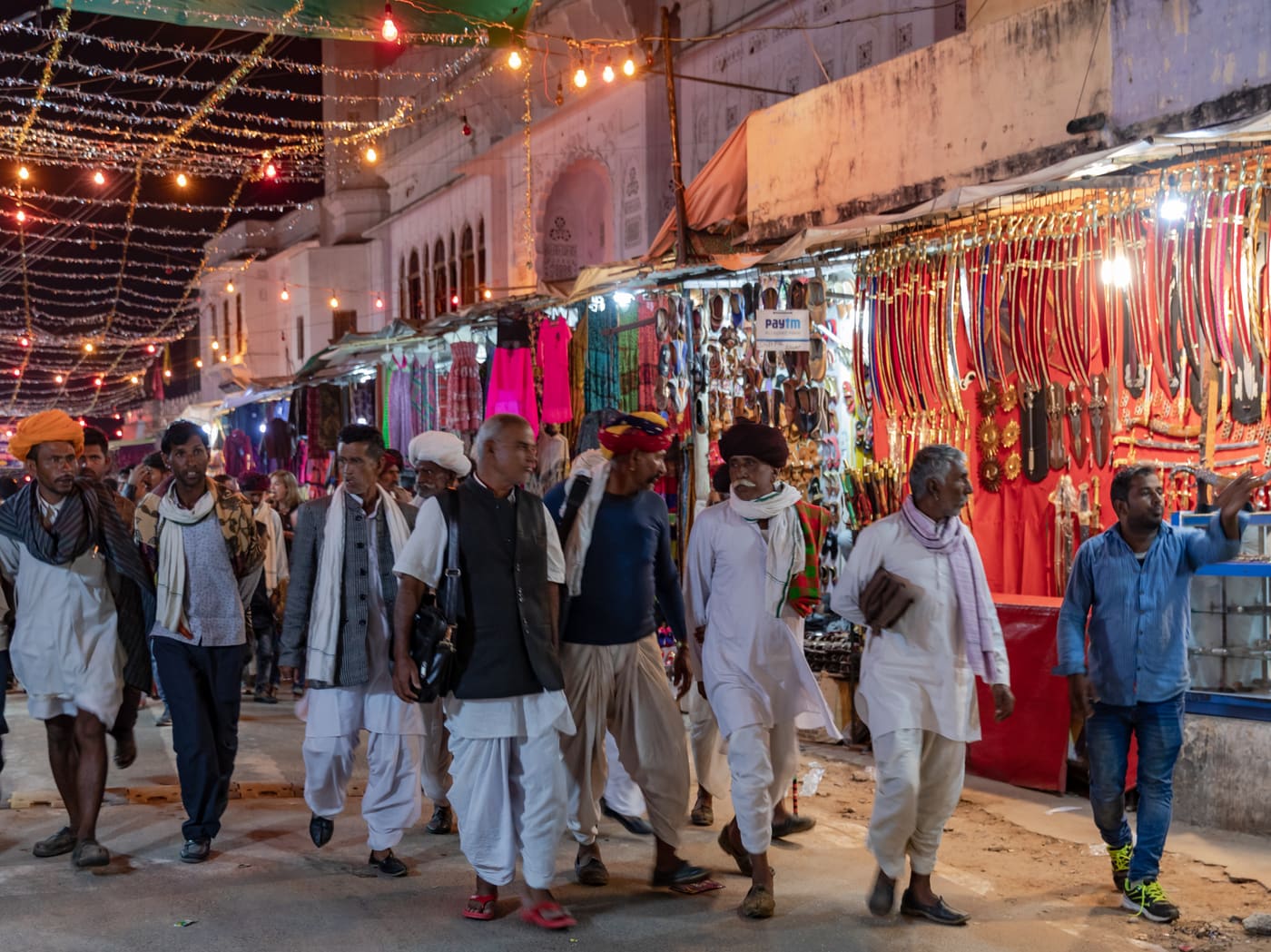
For one week each autumn, the sandy ground west of Pushkar becomes the largest camel and livestock fair on earth. It is simultaneously a serious trading event, a religious pilgrimage and a very large party — and the three things happen in the same square kilometre, at different hours of the day.
When is the Pushkar Camel Fair?
The fair takes place in the Hindu lunar month of Kartik, which falls in late October or November depending on the year. It runs for roughly eight days and ends on Kartik Purnima, the full moon — the day on which pilgrims bathe in the lake, and the single busiest day of the year in Pushkar.
Because the dates follow the lunar calendar they move by two to three weeks from one year to the next, so always confirm the current year’s dates before booking flights or rooms. As a rule the trading is heaviest in the first half of the week and the cultural programme and crowds peak in the second.
What actually happens
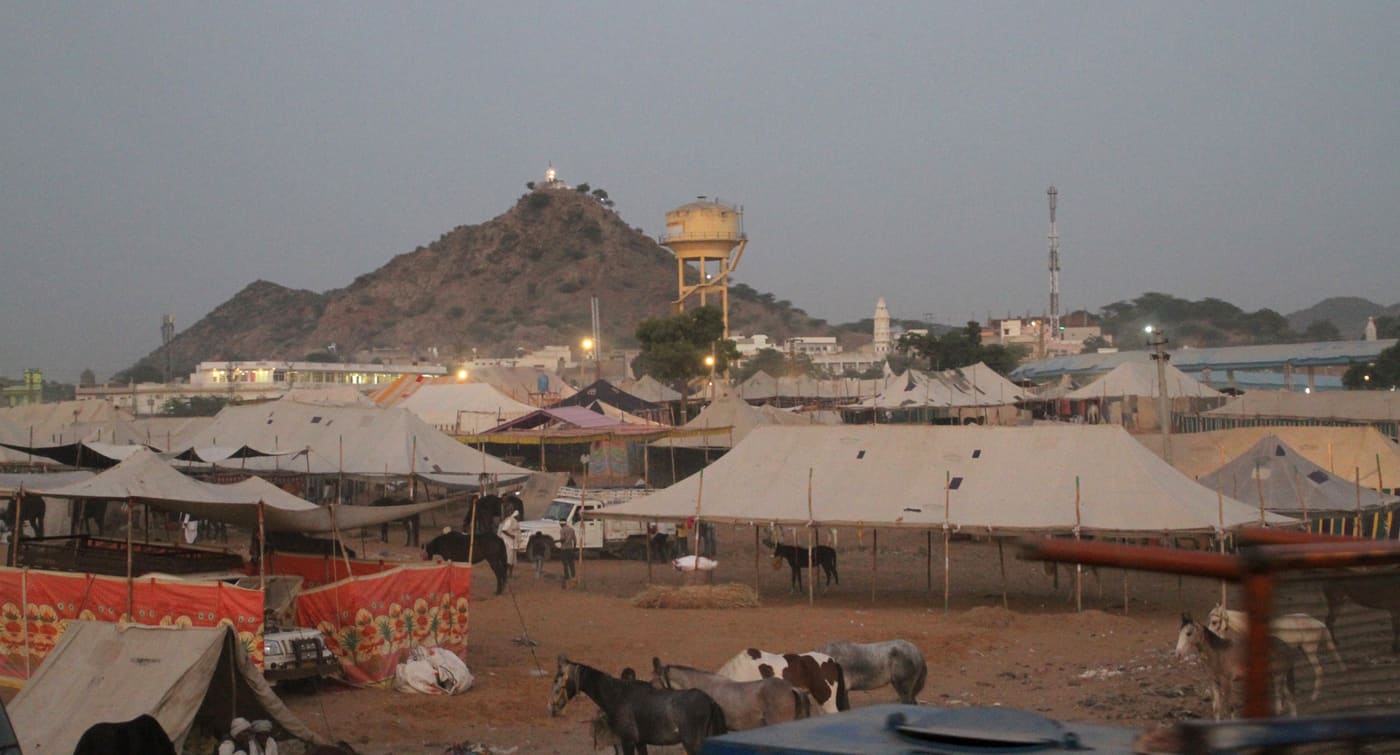
Two things, in parallel. On the fairground itself, herders and traders from across Rajasthan camp with their animals and do business: camels, horses, cattle and goats change hands, animals are decorated, shorn and paraded, and prices are argued over from before first light. This is the part that is genuinely ancient, and it happens at dawn.
Alongside it runs an organised festival with a stadium programme — camel races, camel decoration contests, tug-of-war between local and visiting teams, the famous moustache and turban competitions, folk music and dance in the evenings, a fairground with a Ferris wheel, and hot-air balloons lifting off over the dunes at sunrise. Meanwhile the town’s religious side continues quietly: this is also a major pilgrimage, and the ghats are fuller than at any other time of year.
The single most important tip
Go early, and go again late. The fairground before 8 a.m. is cool, low-lit and full of actual work; by eleven the serious trading is done and what remains is heat, dust and crowds. Sunset brings the ground back to life, along with the best light of the day. The middle of the day is for a rooftop café and a cold drink, not for the Mela.
Photographing the fair
This is one of the most photographed events in India, and the etiquette matters. Ask before photographing people, particularly women and particularly at the ghats. Expect to be asked for money by some of the more photogenic characters on the fairground — the sadhus with elaborate beards and the men with extraordinary moustaches are, quite reasonably, aware of their commercial value. Agree a figure first or move on, and do not photograph anyone who has said no.
Animal welfare
The fair is a working livestock market, and conditions for the animals vary a great deal. Some visitors find parts of it difficult. If you take a camel ride during fair week, look at the animal before you commit: a healthy camel has good body condition, no open sores under the saddle area and a handler who is not using a stick. Choosing carefully is the most useful thing a visitor can do.
Practicalities during Mela week
- Accommodation is booked out months ahead and rates multiply. Book early, take a tented camp on the fairground, or stay in Ajmer and travel in.
- ATMs in town run dry. Bring cash with you.
- Roads into Pushkar are restricted and congested; walking is often faster than a rickshaw.
- Nights in November are cold in the desert — bring a jacket, particularly if you are camping.
- Dust is constant. A scarf and sunglasses are not optional.
Is it worth it?
If you are in Rajasthan in November, unquestionably. There is no other event in India quite like it, and the dawn hours on the livestock ground are genuinely extraordinary. But it is hot, crowded, dusty and expensive in a way Pushkar never otherwise is — so go with a plan, stay at least one night, and treat the middle of each day as time off.