Skip to content
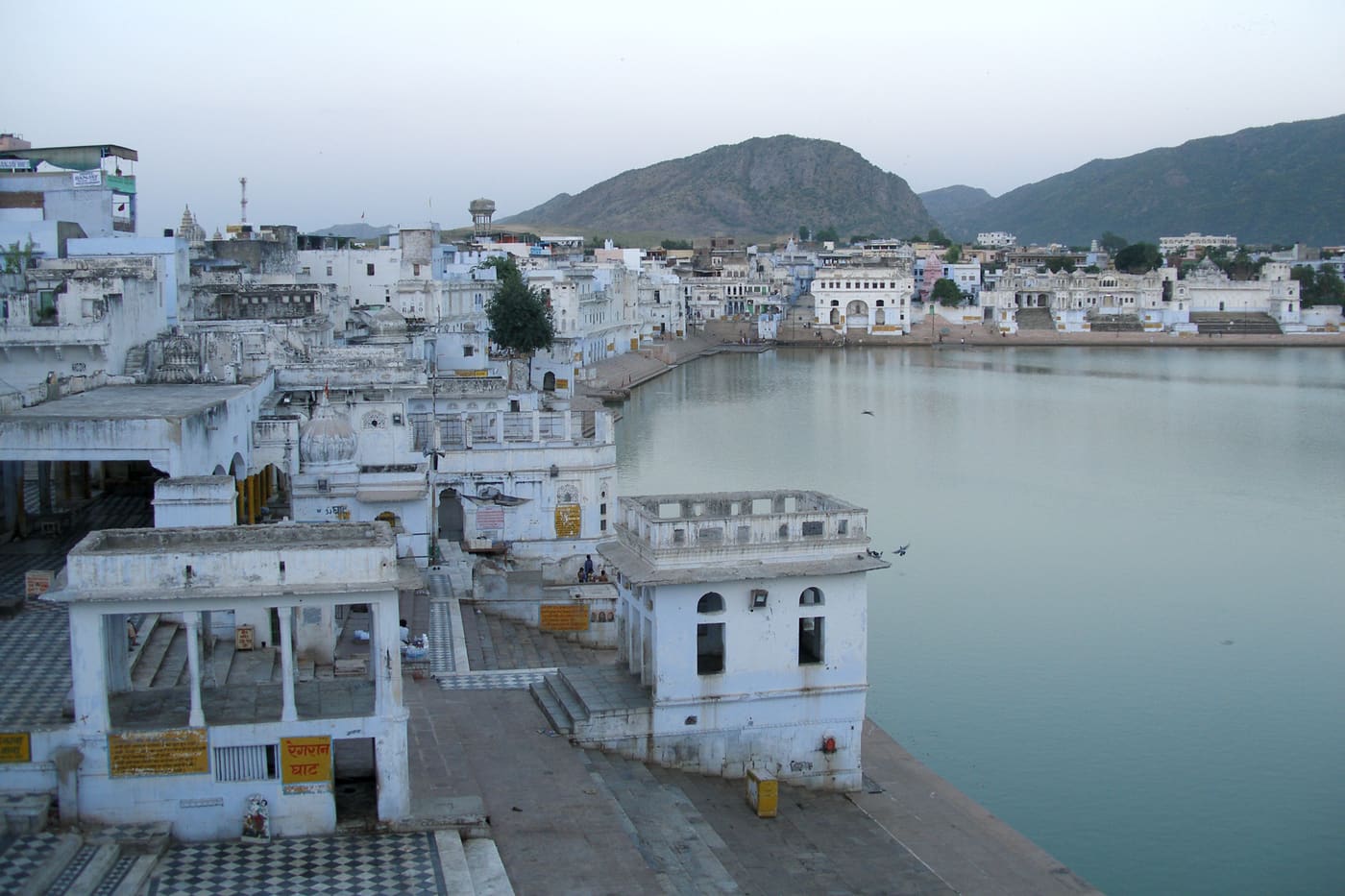
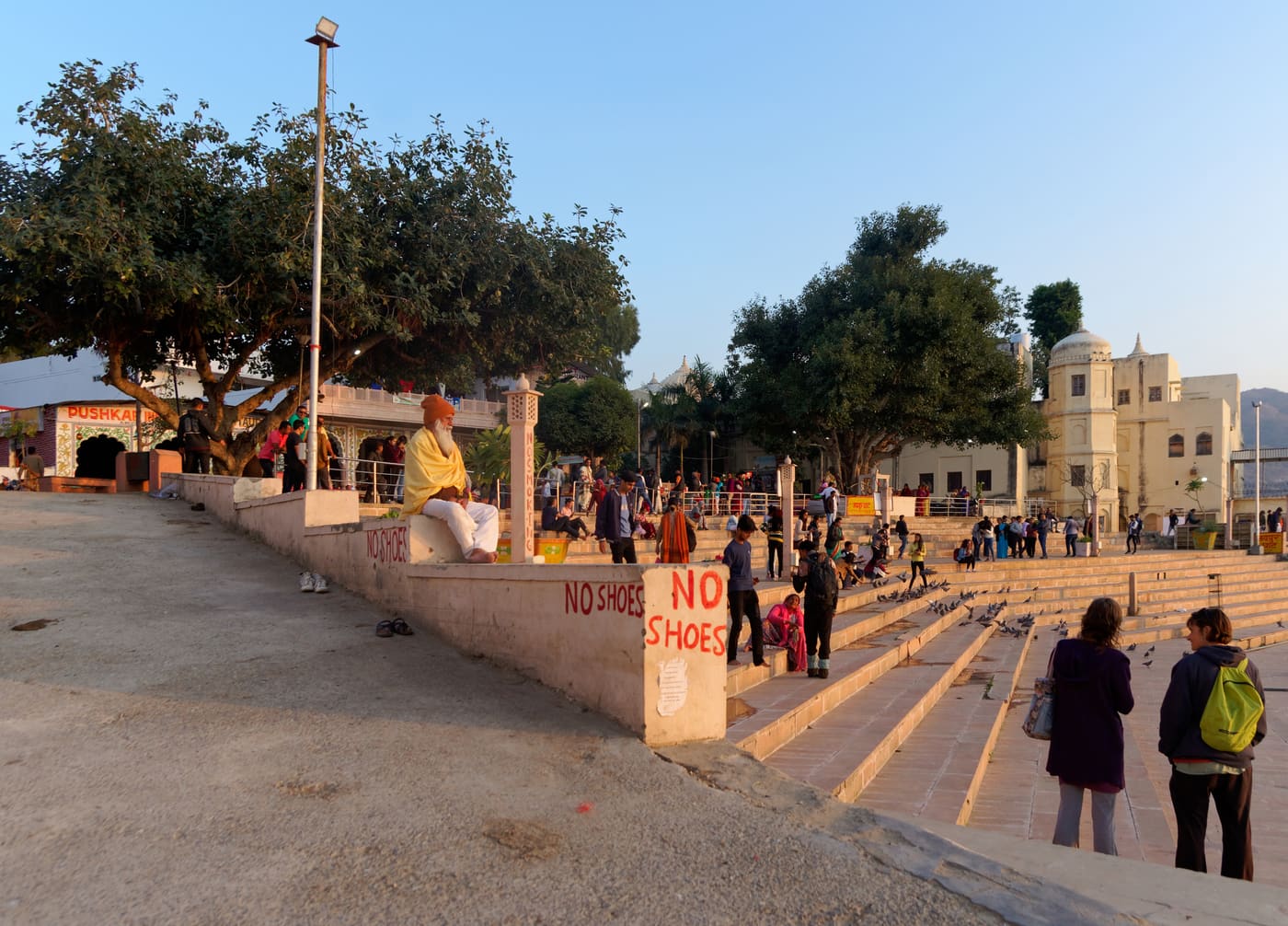
Stone ghats and white temples along the shore of Pushkar Lake

Things to Do in Pushkar

Nine places that between them tell the whole story of this town — the sacred, the commercial and the desert that starts at its edge.

Pushkar is walkable end to end in half an hour, so "what to see" is less about logistics than about timing: the lake at dawn and dusk, the temples in the cool hours, the hills for sunrise and sunset, and the dunes in the last light of the afternoon. Each guide below covers what there is to see, how to get there, and the local etiquette worth knowing before you arrive.

The holy lake & ghats

Stone bathing ghats and white temples along the shore of Pushkar Lake The holy lake & ghats

Pushkar Lake & the 52 Ghats

One of Hinduism’s holiest lakes

A small green lake ringed by 52 stone bathing ghats and hundreds of temples, said to have formed where Brahma dropped a lotus flower. At dawn and dusk the steps fill with pilgrims, priests, drummers and drifting oil lamps.
Temples & sacred sites

The red spire and marble steps of the Brahma Temple in Pushkar Temples & sacred sites

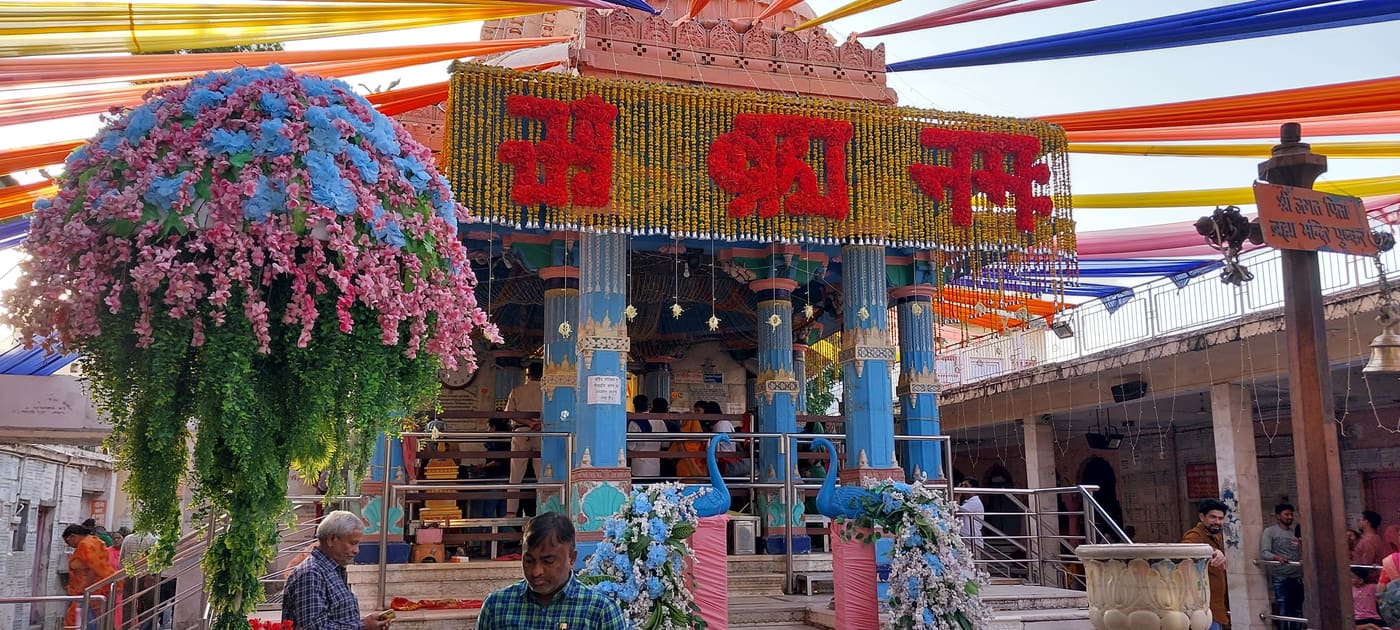
Jagatpita Brahma Temple

The world’s foremost temple to Brahma

A red-spired temple that is the most important shrine anywhere to Brahma the creator — a god who, uniquely in the Hindu trinity, is almost never given temples of his own. Its marble floor is studded with silver coins left by pilgrims.

The hilltop Savitri Mata Temple above Pushkar Temples & sacred sites

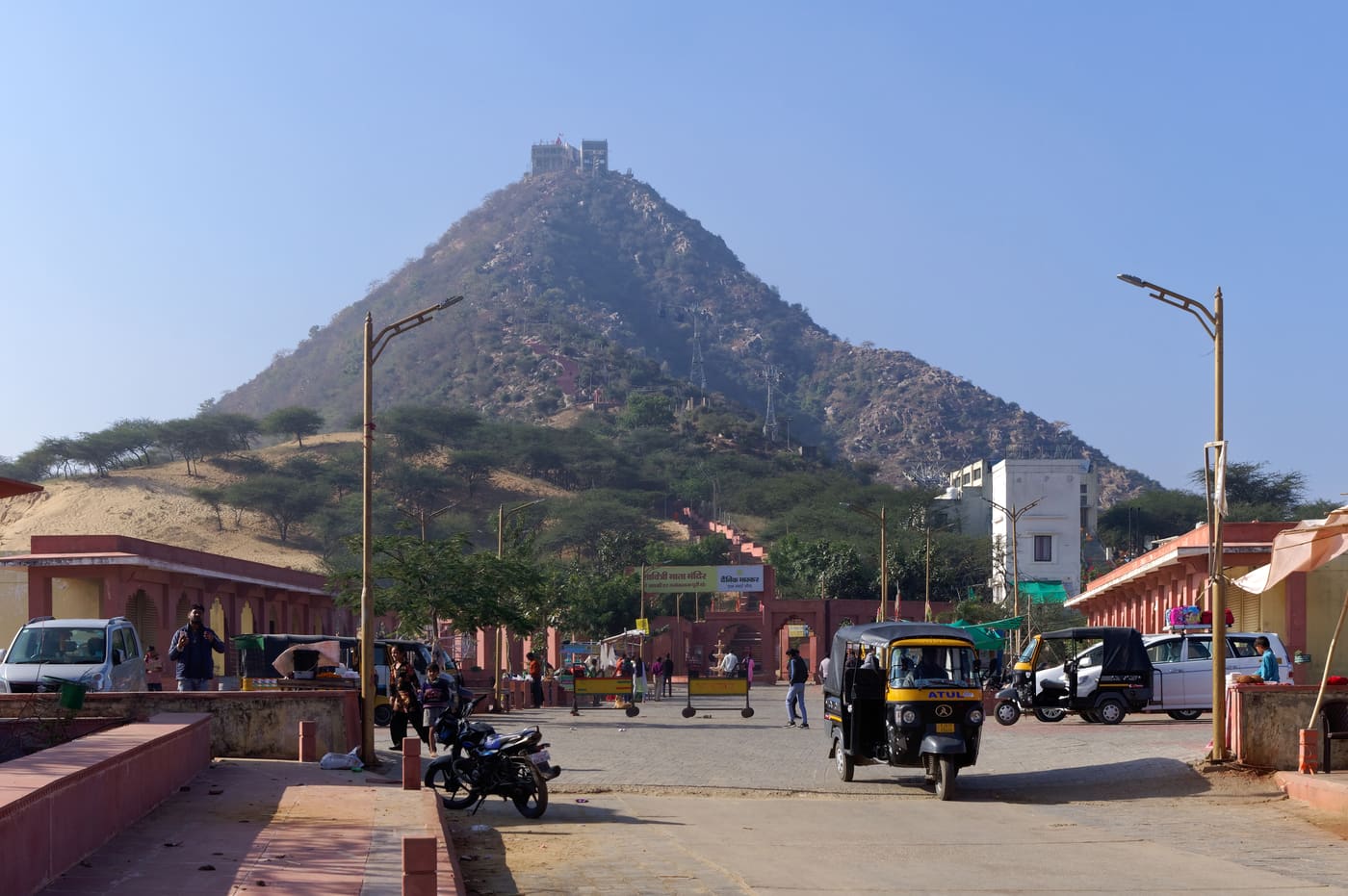
Savitri Mata Temple

Sunrise from the hill above town

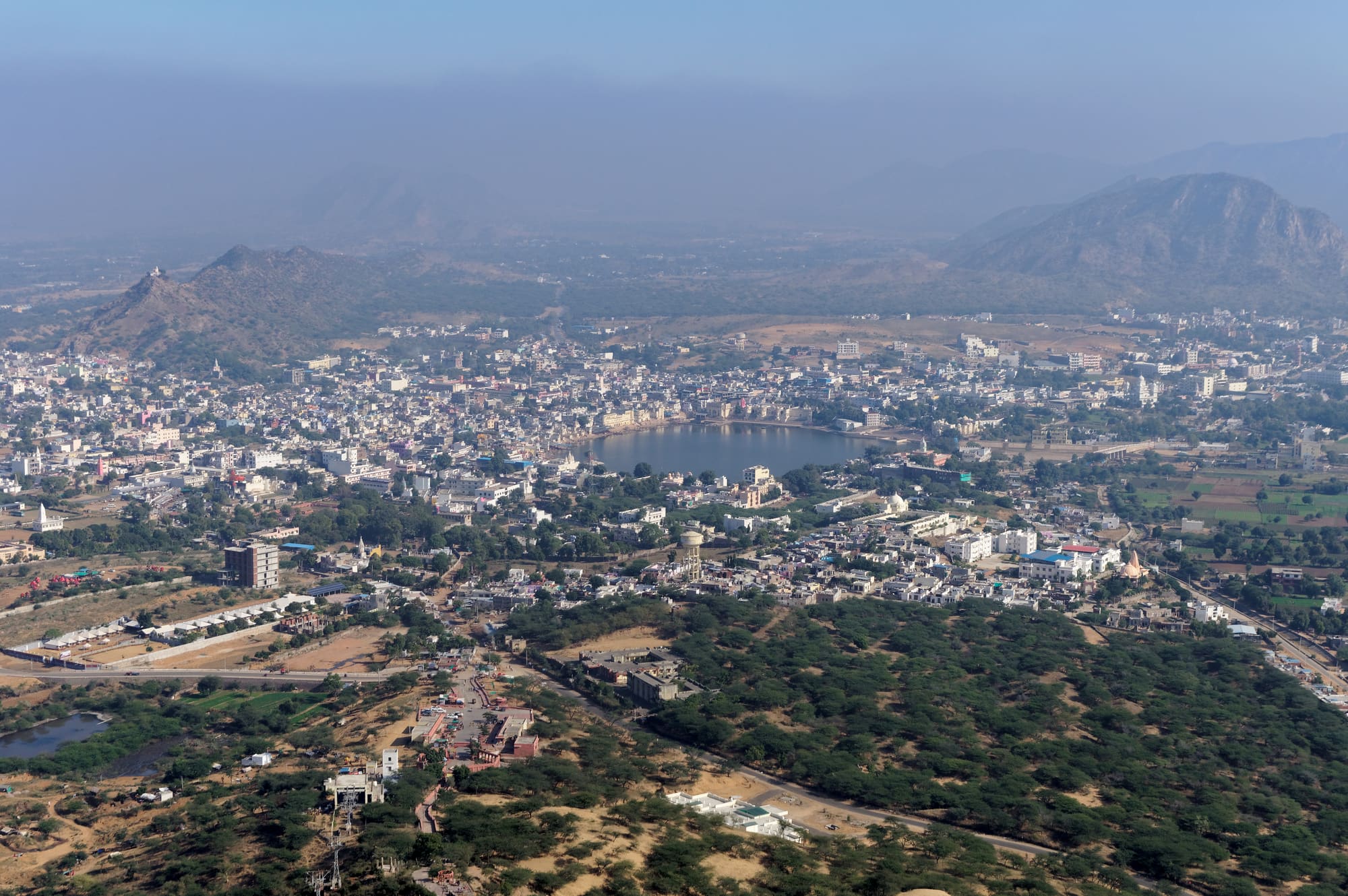
Brahma’s first wife looks down on Pushkar from the top of Ratnagiri hill — reached by around 650 steps or a short ropeway. The reward is the finest view in the district: the whole lake, the town’s white roofs and the desert running west.

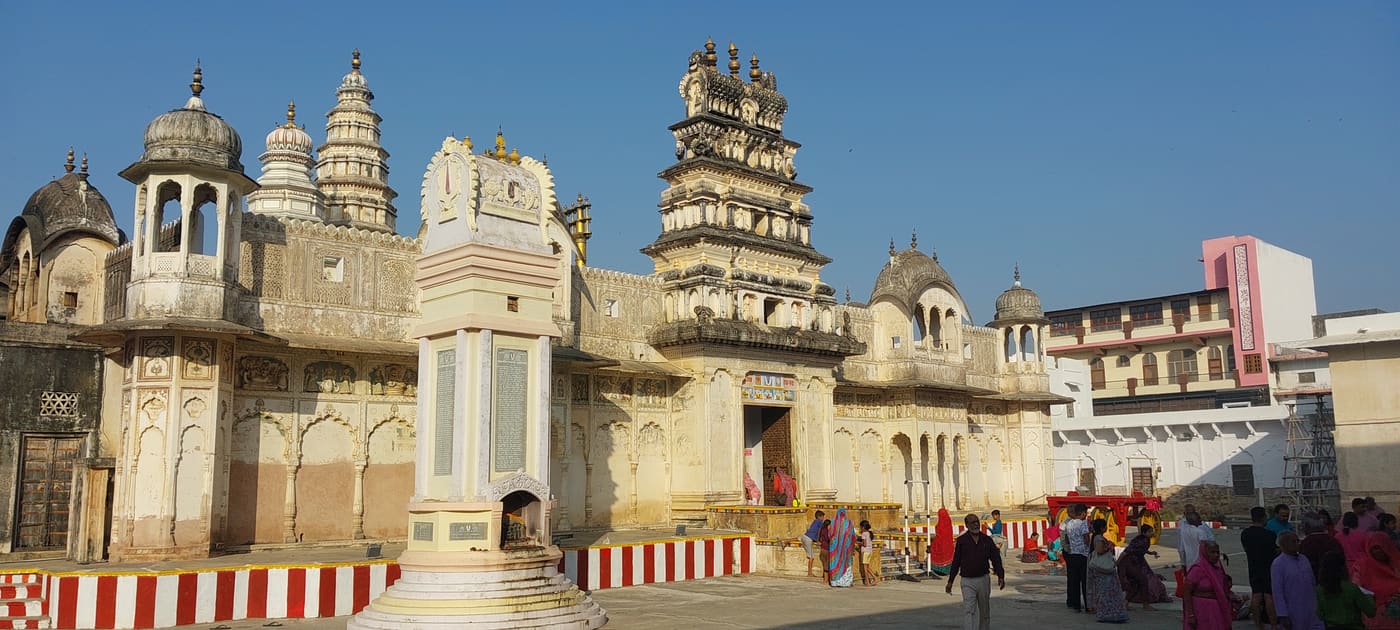
The tiered South Indian gopuram tower of the Old Rangji Temple, Pushkar Temples & sacred sites

Old Rangji Temple

South India in the Rajasthani desert

Built in 1823 and unmistakable: a soaring South Indian gopuram rising over the desert lanes, with Rajput and Mughal detailing layered on top. Dedicated to Rangji, a form of Vishnu, it is the most architecturally surprising building in town.

Bazaars & town life

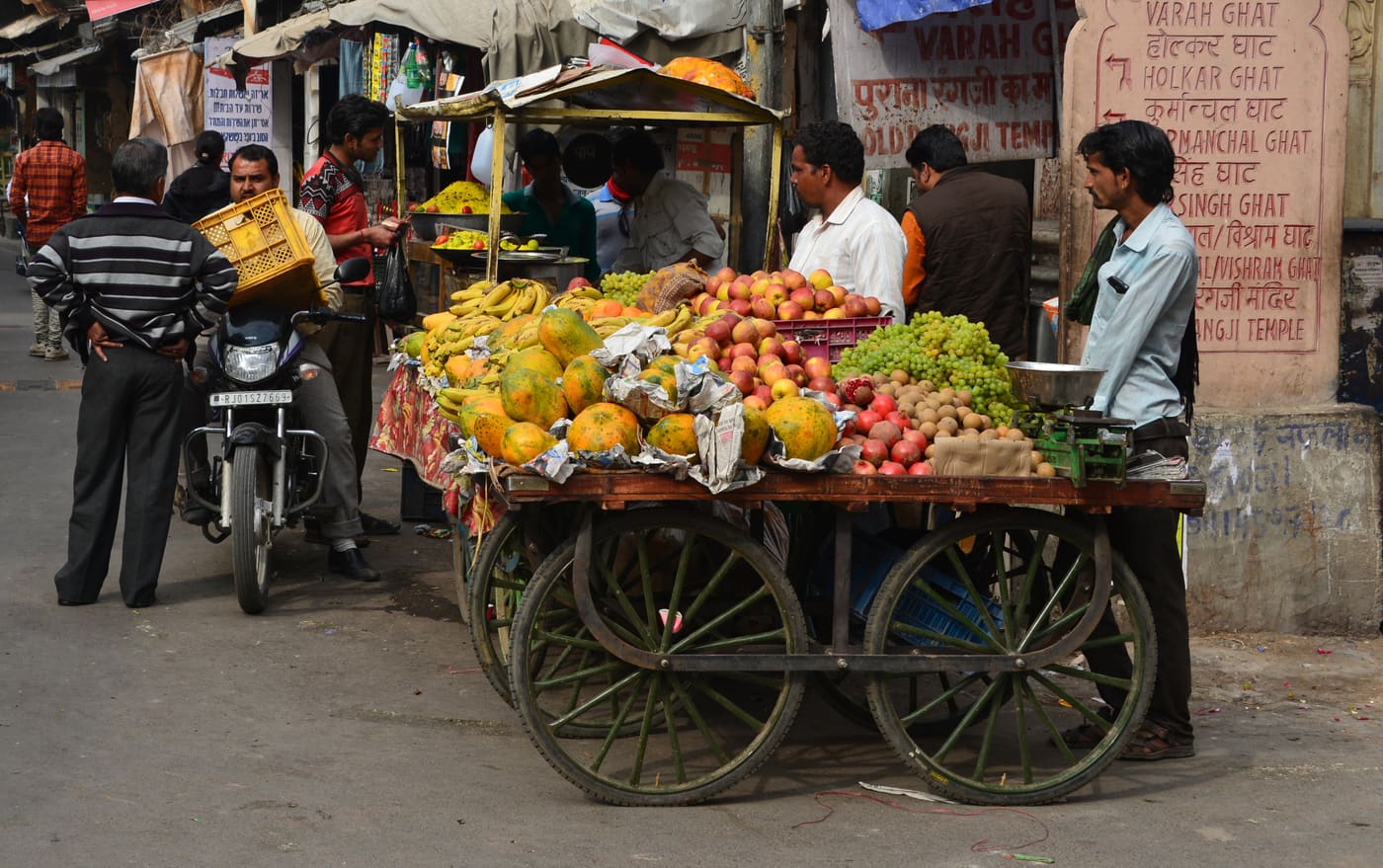
Stalls and shoppers along Sadar Bazaar in Pushkar Bazaars & town life

Sadar Bazaar

The one long street that is Pushkar

Pushkar is essentially a single bazaar street curving along the lake, and it has been a trading town for as long as it has been a pilgrimage one. Silver, block-printed cotton, camel leather, puppets, rose products — and the best rooftop cafés in Rajasthan.

Traders and camels gathered on the Pushkar fairground Bazaars & town life

Pushkar Mela Ground

Empty sand — until November

The wide sandy ground west of town is quiet dunes for eleven months of the year and, for one week each November, the largest camel and livestock fair on earth: tens of thousands of animals, traders from across Rajasthan and a stadium of folk competitions.

Desert & around Pushkar

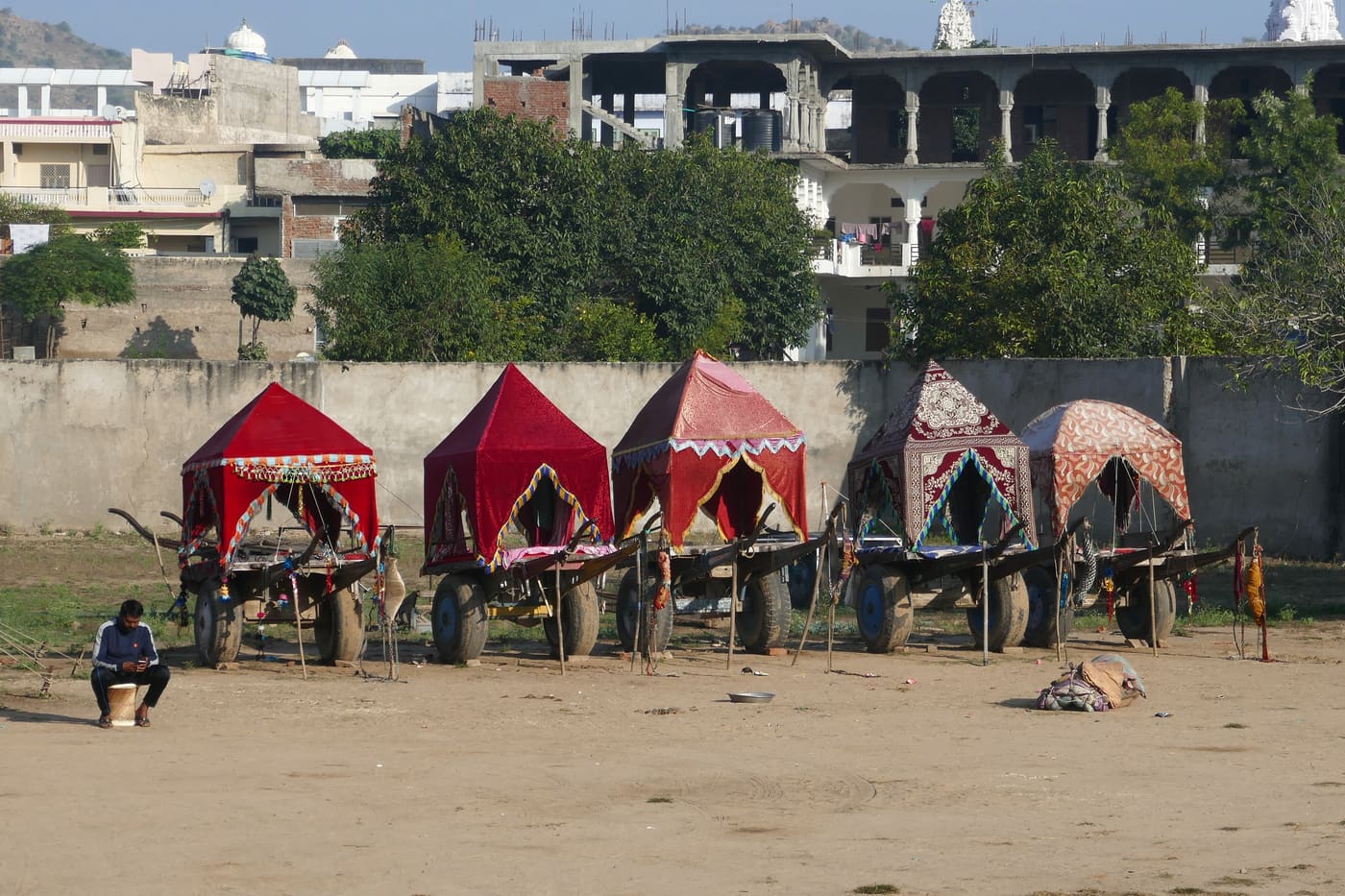
Camel carts crossing the sandy country outside Pushkar Desert & around Pushkar

The Pushkar Dunes

Where the Thar begins

Ten minutes from the bazaar the lanes give out and the sand starts. This is the eastern edge of the Thar Desert, and the classic Pushkar afternoon is a camel or jeep ride to the dunes for chai, a fire with folk musicians and a sunset with no buildings in it.

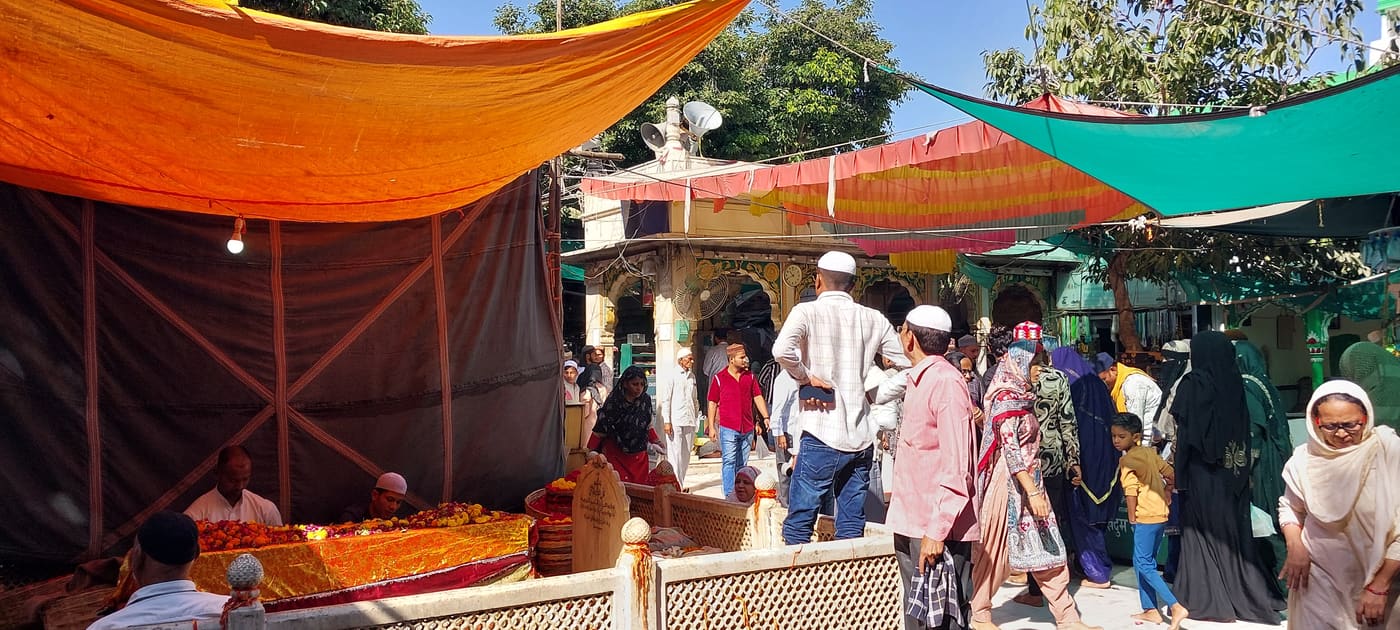
The marble gateway and courtyards of Ajmer Sharif Dargah Desert & around Pushkar

Ajmer Sharif Dargah

A great Sufi shrine, 15 km away

Over the hills in Ajmer lies the tomb of Khwaja Moinuddin Chishti, among the most visited Sufi shrines in the world and a place of pilgrimage for Muslims, Hindus and Sikhs alike. Qawwali singers, marble courtyards and enormous cooking cauldrons.

Plan your days in Pushkar

Make Pushkar the highlight of your Rajasthan trip

A sacred lake ringed by 52 ghats, the world’s best-known Brahma Temple, camel dunes at sunset and a bazaar that never quite sleeps. Compare tours and experiences and book in a couple of taps.