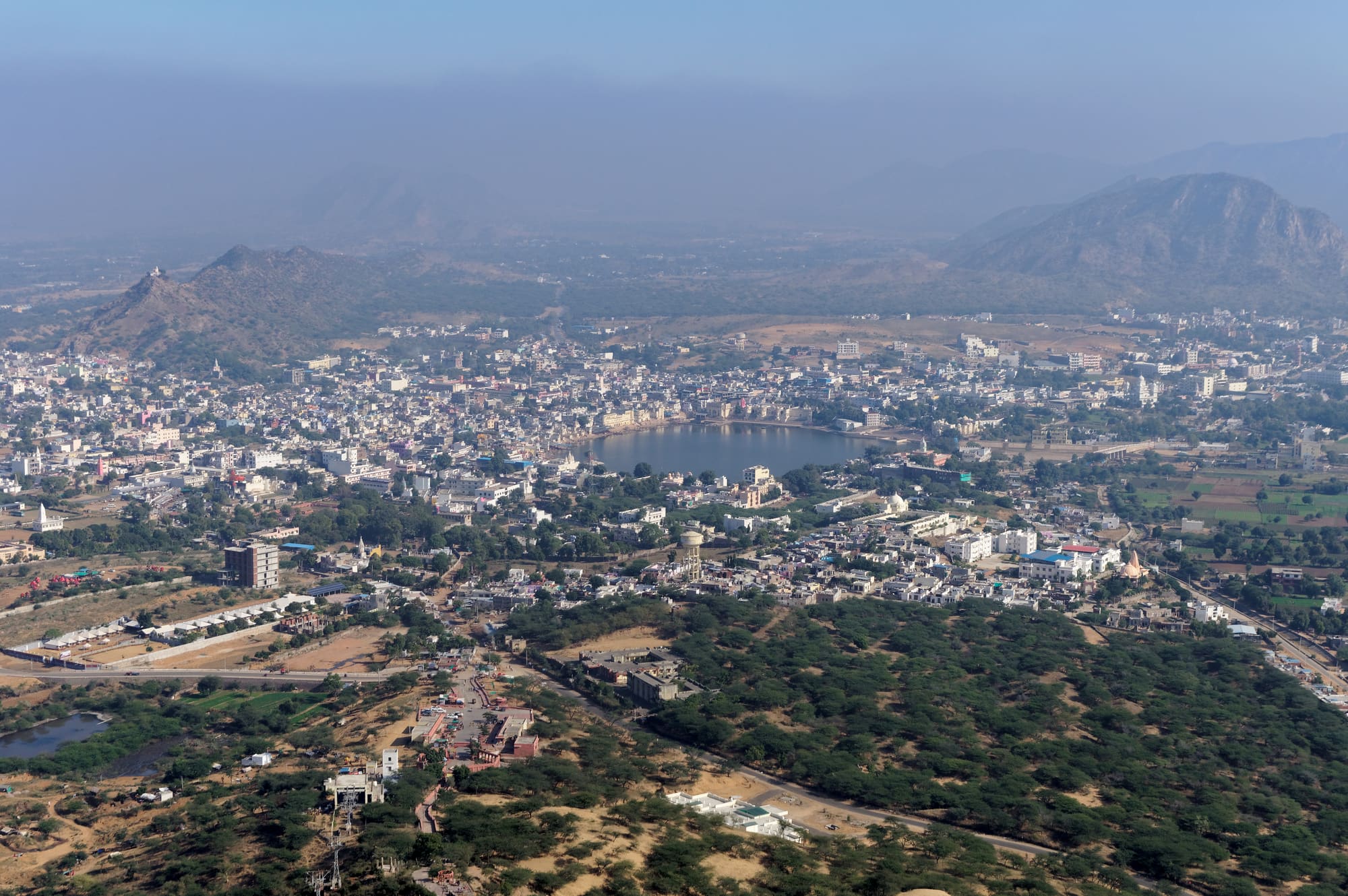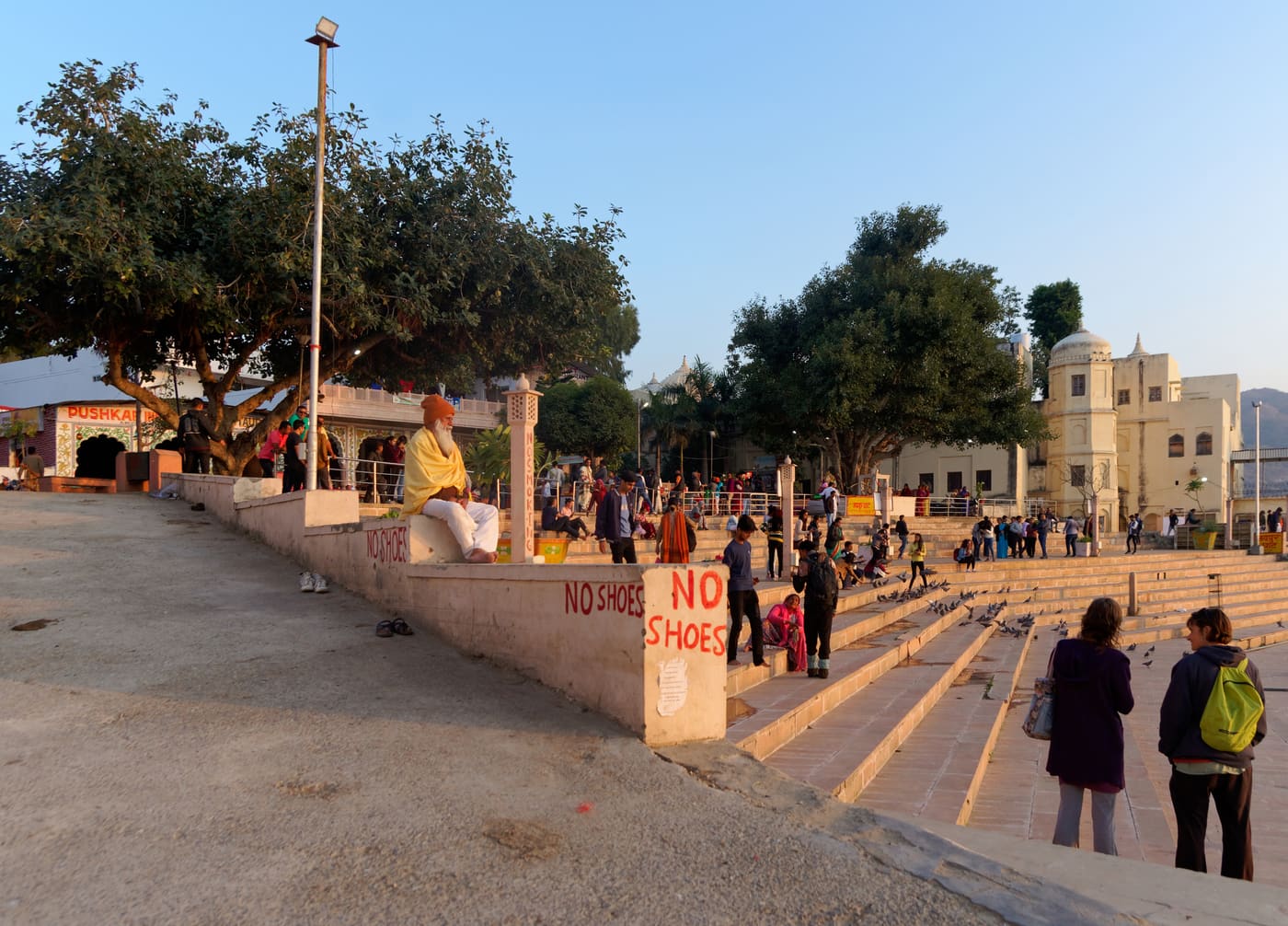
Pushkar Lake is the reason the town exists. Hindu scripture tells it simply: Brahma, looking for a place to perform a yagna, let a lotus flower fall from his hand, and where its petals touched the earth, water rose. Fifty-two ghats — broad flights of stone steps, each built and named by a different princely family — run down into that water, and more than four hundred temples crowd the lanes behind them.
It is a small lake, and on a hot afternoon it can look almost ordinary. Come at five in the morning or five in the evening and it is something else entirely: priests calling, drums starting up, pilgrims stepping into the water fully clothed, and, after dark, hundreds of tiny oil lamps pushed out from the steps to drift. The evening Mahaarti at the main ghats is the single thing every visitor should see.
Top things to do at Pushkar Lake & the 52 Ghats
Watch the evening Mahaarti
At sunset the ghats fill with lamplight, bells and singing as lamps are offered to the lake. Varah Ghat, Brahma Ghat and Gau Ghat are the main stages; arrive 20 minutes early and sit on the upper steps.
Walk the full circuit of ghats
A slow lap of the lake takes about 45 minutes and passes all 52 ghats, dozens of small shrines and a constantly changing cast of pilgrims, sadhus, washermen and langurs.
Be there for sunrise
The first hour of light is the quietest and the most beautiful — mist on the water, the white temples turning gold, and bathers arriving before the heat.
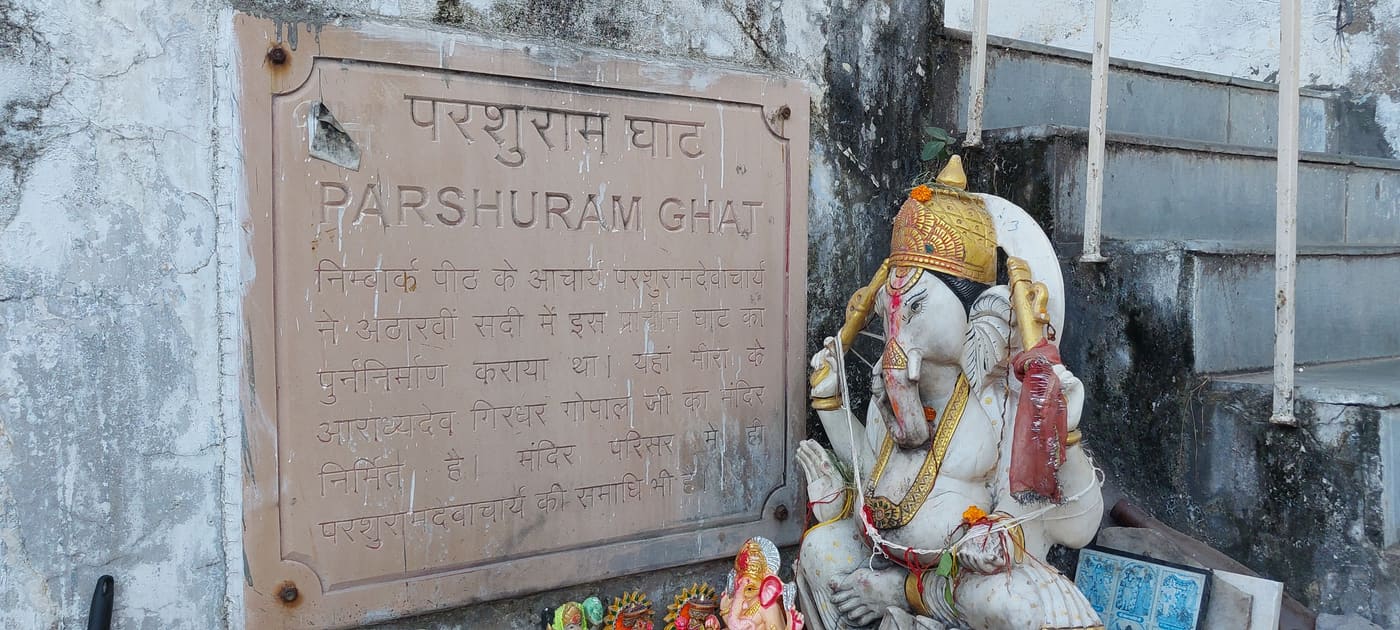
Visit Gau Ghat
Also called Gandhi Ghat: some of Mahatma Gandhi’s ashes were immersed here, and Jawaharlal Nehru’s too. It is the ghat where Indian visitors most often pause.
How to get to Pushkar Lake & the 52 Ghats
- The lake is the centre of town — every lane off Sadar Bazaar runs down to a ghat, and nowhere in Pushkar is more than a ten-minute walk from the water.
- From Ajmer: buses run to Pushkar every few minutes (about 30 minutes over Nag Pahar), then it is a 10-minute walk from the bus stand.
- On a guided walk: the evening and afternoon walking tours both build their route around the ghats and explain what is happening at each one.
- Shoes come off before you step onto any ghat, and leather items (belts, bags) are best left behind. Photography of people bathing is not welcome — ask, or point the camera elsewhere.
- If someone hands you a flower and offers a blessing, you are being drawn into the "Pushkar passport" routine: a quick puja followed by pressure to donate a large sum, and a red thread tied on your wrist. A polite, firm "no, thank you" before you accept anything is all it takes.
- The whole town is vegetarian and alcohol-free, and eggs are not sold either — this is taken seriously around the lake in particular.
Best tours & tickets for Pushkar Lake & the 52 Ghats
These top-rated experiences are the easiest way to enjoy Pushkar Lake & the 52 Ghats and its surroundings:
 Guided walking tour from €5
 Pushkar: Evening Walking Tour with Fire Rituals
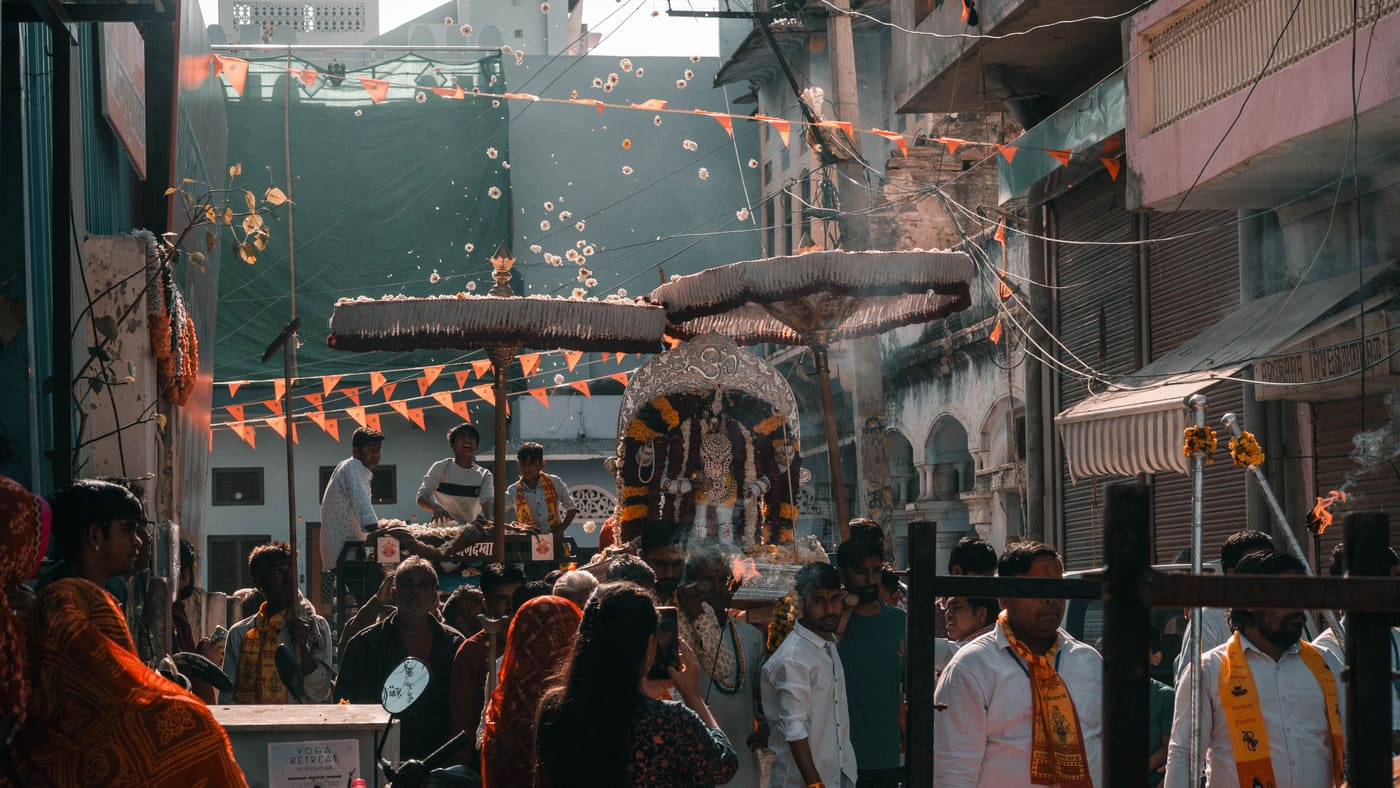
The single best-reviewed thing you can do in Pushkar, and the one that turns a pretty lake into a place you understand. A local guide walks you through the old town at the hour it comes alive — past the bathing ghats, into working temples, and down to the water for the Mahaarti, the fire ritual in which lamps are floated and offered to the lake. Along the way you get the practical stuff nobody tells you: where to leave your shoes, which ghats welcome visitors, and how to sidestep the "flower blessing" scam. Rated 4.9 from well over a hundred reviews.
- Walk the ghats and lanes as the town lights its evening lamps
- Watch — and, if you wish, take part in — the Mahaarti fire ceremony
- Visit several of Pushkar’s living temples with a local guide
 Private walking tour from €5
 Pushkar: Afternoon Walking Tour of Temples & Bazaars
The daylight counterpart to the evening walk, and a private one — useful if you would rather ask a lot of questions than share a group. Your guide threads the lanes between the Brahma Temple, the smaller shrines most visitors walk straight past, and the ghats, explaining what is happening at each and why Pushkar matters to the millions who come here on pilgrimage. The second half is the bazaar, where a local eye is worth real money: you learn what Rajasthani block-print, camel leather and Pushkar rose oil should actually cost.
- Private guide, so the pace and the questions are yours
- The Brahma Temple, Varaha Temple and the lakeside ghats
- Sadar Bazaar: textiles, silver, leather and rose products
 Private tour from €5
 Pushkar: Private Walking Tour with a Local Guide
A simple, low-cost private guide for however much of Pushkar you want to cover. Because nothing is fixed, this is the option to take if you already know roughly what interests you — the temple circuit, photography around the ghats, the Brahmin quarter, or the market. It is also the friendliest way to visit a town where a lot of first-time visitors feel a little unsure: having someone alongside you who knows which ghats welcome outsiders and which rituals are private removes almost all of the friction.
- Entirely private and shaped around what you want to see
- Temples, ghats, bazaar and the quiet corners in between
- Great value for what a private guide normally costs