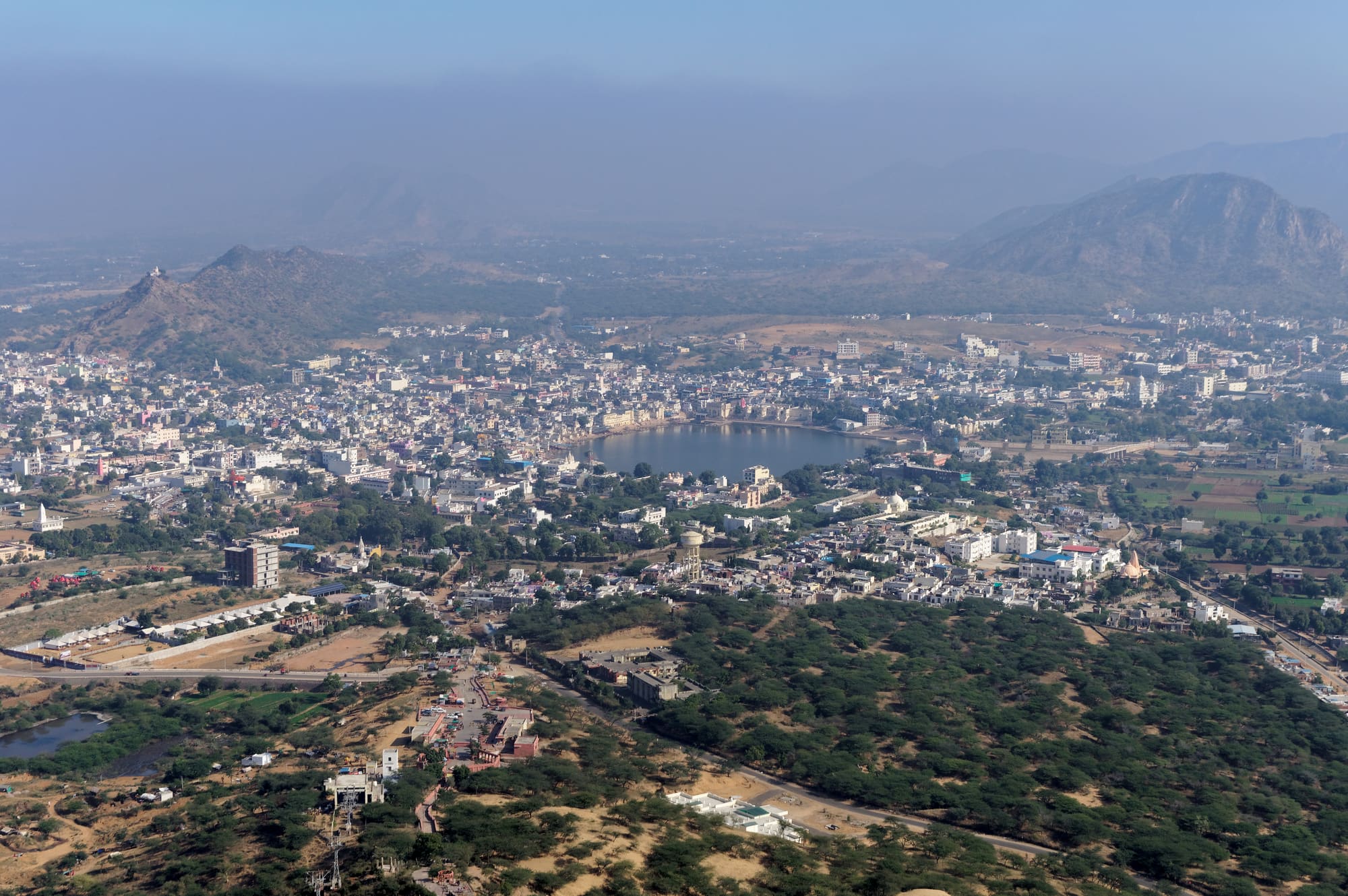
Pushkar is one of the oldest continuously inhabited places in India and one of the easiest to enjoy: small, walkable, inexpensive and unusually gentle for Rajasthan. This guide covers what you need to know before you go, and what most first-time visitors wish they had known.
Pushkar in brief
- Where: Ajmer district, Rajasthan, on the eastern edge of the Thar Desert.
- Size: about 20,000 people; walkable end to end in half an hour.
- Famous for: the holy lake and its 52 ghats, the world’s foremost Brahma Temple, and the November Camel Fair.
- Note: the town is vegetarian, egg-free and alcohol-free.
- Language: Hindi and Marwari; English is widely spoken in tourism.
What to see
The lake and its ghats are the heart of it, and the places guide covers everything in detail. In short: the Brahma Temple for its rarity, Savitri Mata at sunrise and Gayatri at sunset for the views, Sadar Bazaar for shopping and rooftop cafés, the Old Rangji Temple for its wildly out-of-place South Indian tower, and the dunes for a camel ride.
 The holy lake & ghats
 Pushkar Lake & the 52 Ghats
One of Hinduism’s holiest lakes
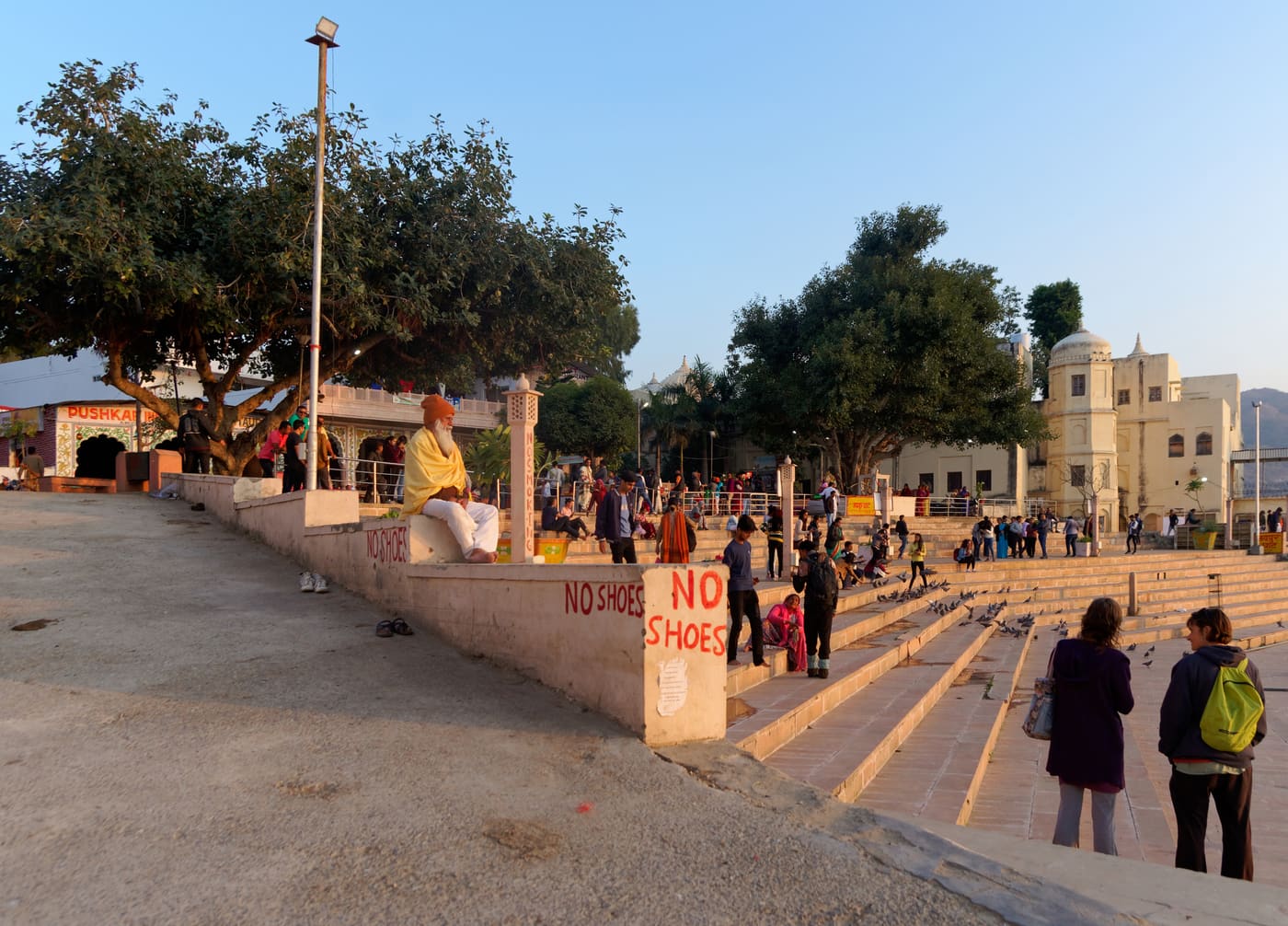
A small green lake ringed by 52 stone bathing ghats and hundreds of temples, said to have formed where Brahma dropped a lotus flower. At dawn and dusk the steps fill with pilgrims, priests, drummers and drifting oil lamps.
 Temples & sacred sites
 Jagatpita Brahma Temple
The world’s foremost temple to Brahma
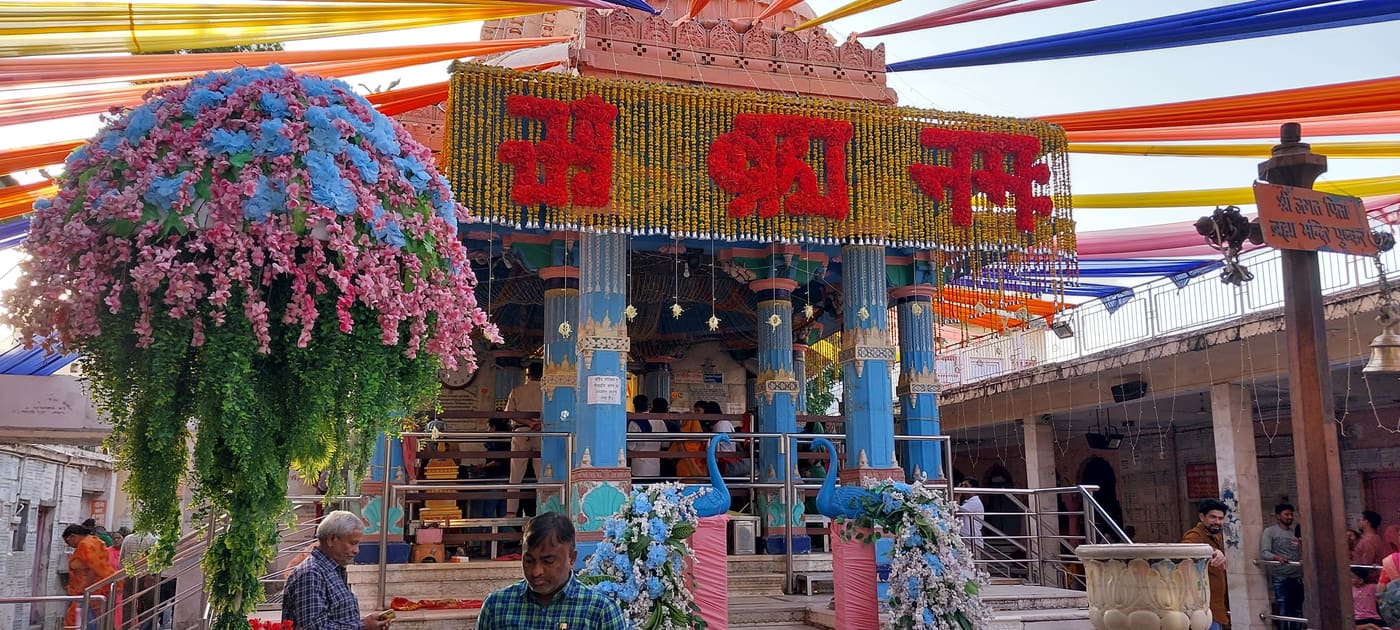
A red-spired temple that is the most important shrine anywhere to Brahma the creator — a god who, uniquely in the Hindu trinity, is almost never given temples of his own. Its marble floor is studded with silver coins left by pilgrims.
 Temples & sacred sites
 Savitri Mata Temple
Sunrise from the hill above town
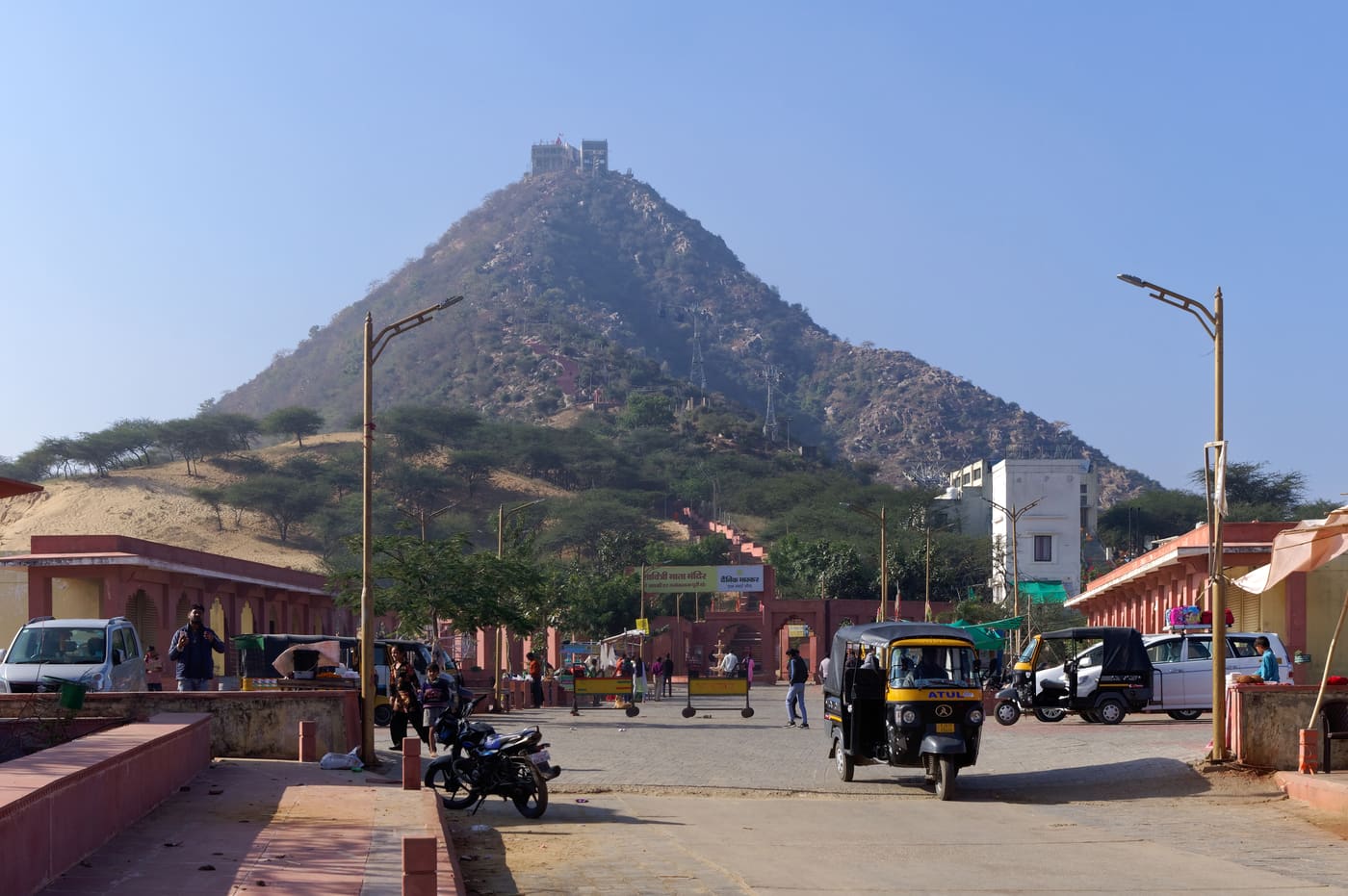
Brahma’s first wife looks down on Pushkar from the top of Ratnagiri hill — reached by around 650 steps or a short ropeway. The reward is the finest view in the district: the whole lake, the town’s white roofs and the desert running west.
 Bazaars & town life
 Sadar Bazaar
The one long street that is Pushkar
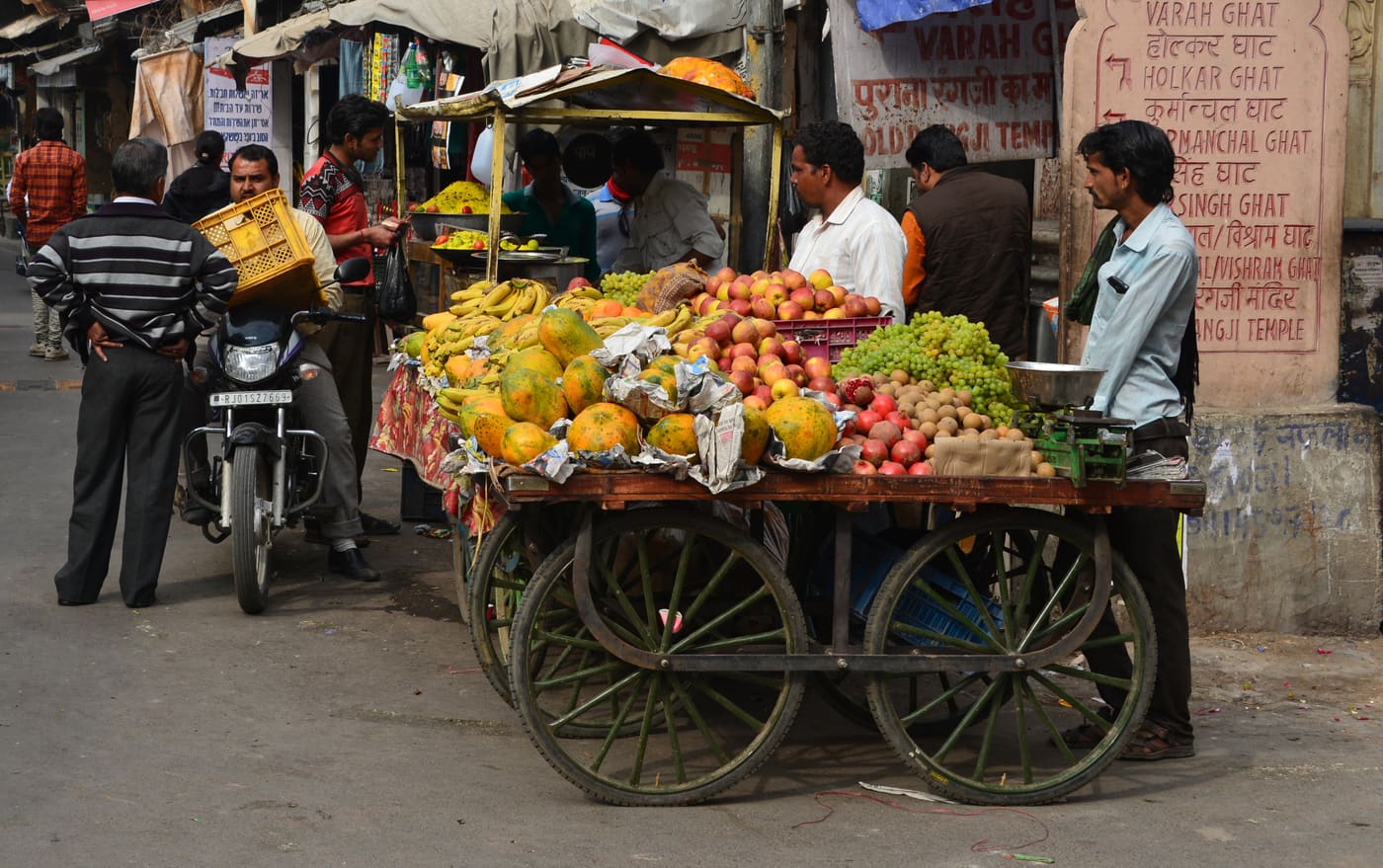
Pushkar is essentially a single bazaar street curving along the lake, and it has been a trading town for as long as it has been a pilgrimage one. Silver, block-printed cotton, camel leather, puppets, rose products — and the best rooftop cafés in Rajasthan.
Temple and ghat etiquette
This is a working pilgrimage town, not a museum, and a small amount of care makes an enormous difference to how you are received.
- Remove shoes before stepping onto any ghat or entering a temple. Leather items — belts, bags, wallets — are best left behind too.
- Cover shoulders and knees. A scarf is useful for temples and essential at the Ajmer Dargah.
- Ask before photographing people, and never photograph anyone bathing or praying without clear permission.
- Do not point the soles of your feet at a shrine or a person, and use your right hand for giving and receiving.
The "Pushkar passport" — and how to say no
Pushkar’s one persistent annoyance: someone approaches near the ghats, presses a flower into your hand and offers a blessing. What follows is a short puja, then firm pressure to donate a large sum "for the temple", and a red thread tied around your wrist — the so-called Pushkar passport. Genuine priests do perform pujas at the ghats and the practice itself is real; the scam is the aggressive fixed "donation". The defence is simple: do not accept the flower. A polite, unembarrassed "no, thank you" before anything is placed in your hand ends it immediately.
Food in an all-vegetarian town
No meat, no eggs, no alcohol — and genuinely excellent food anyway. Try dal baati churma, the Rajasthani dish of baked wheat balls with lentils and sweetened crushed wheat; gatte ki sabzi, gram-flour dumplings in a yoghurt curry; kachoris from a street stall; and malpua or rabri for something sweet. The rooftop cafés along the bazaar serve everything from thalis to surprisingly good Israeli and Italian food — a legacy of decades of long-stay travellers.
A warning worth repeating: "special lassi" means bhang lassi, a cannabis preparation which is legal and openly sold here. It is much stronger and much slower to take effect than newcomers expect. If you try it, order the smallest size and do not plan anything for the rest of the day.
Sample itineraries
One night: arrive in the afternoon, walk the bazaar, climb Gayatri hill for sunset, and take the evening walking tour for the Mahaarti. Next morning, Savitri Mata at dawn, the Brahma Temple after breakfast, and out by lunch.
Two nights (recommended): as above, plus a full second day — a camel safari to the dunes in the late afternoon, the Rangji Temple and the quieter northern lanes in the morning, and a long lunch on a rooftop.
Three or more: add a half-day in Ajmer for the Dargah, a yoga class, and a day trip to Chittorgarh or Jodhpur.
Money, connectivity and practicalities
- Cash matters. Many small shops, rickshaws and shoe stands are cash-only, and ATMs run dry during Camel Fair week.
- UPI is widely accepted by Indian phone numbers; foreign cards are hit and miss outside hotels.
- Mobile data is good. An Indian SIM is worth getting on arrival in the country.
- Tap water is not drinkable. Refill points for filtered water are increasingly common — worth seeking out over buying bottles.
- Pharmacies are on the main bazaar; the nearest full hospital is in Ajmer.
Money-saving tips
- Travel outside November. Camel Fair week costs several times more for the same room.
- Stay in the old town rather than a resort and you will not need transport at all.
- Eat where the thali is written on a board rather than a menu — it is better and a fraction of the price.
- Walking tours in Pushkar cost a few euros; they are the best-value guiding in Rajasthan. See our ranked picks.